
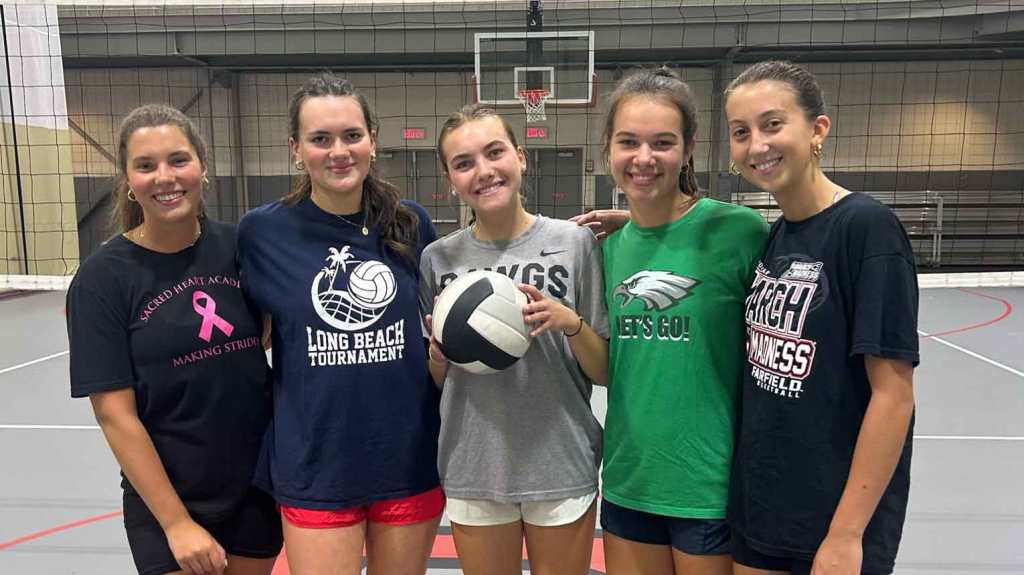
Fairfield University students have canceled over 200 intramural games during the first four weeks of the fall intramural season, a number that is on track to significantly surpass the cancellations received last semester, according to the university’s Recreation Department.
The issue has led the intramural program to send constant emails about the issue to participants, with an email sent on Oct. 16 describing its increase in cancellations as “completely unnecessary and unacceptable.”
According to data provided by Ethan Godfrey, Program Coordinator of Competitive Sports, since the start of the intramural season on September 22, his office has received 201 requests from teams regarding cancellations. Almost half of the games were “lost,” a term the office uses to describe the inability to find fill-in teams.
Last semester, the intramurals program received 283 cancellations for both the winter and spring seasons.
“We started noticing an increase in cancellations and forfeits last fall. We had a total of 156 forfeits and an increase in last-minute cancellations,” Godfrey told The Mirror as he explained that earlier this year, his team started to collect data on every cancellation in an effort to better understand the situation.
Godfrey said that this year, most of the cancellations stemmed from teams competing in pickleball and 3v3 basketball, both sports that only require a small number of players.
“We typically see cancellations in these two sports since they are made up of 2-3 players. We’ve constantly reminded teams to bulk up their rosters and add free agents,” Godfrey added. “This ensures they have enough players for their games if captains know they’re missing a few numbers.
A cancellation occurs when a team notifies the Competitive Sports program that they cannot play their scheduled game.
Teams playing intramural sports have up to two cancellations per season, with additional cancellations resulting in automatic losses and potential removal from their league. As of last week, 18 teams have exceeded the two-game cancellation limit.
The cancellations also affect student workers, Godfrey said, with the lack of games resulting in “entire shifts” canceled and student employees missing working hours.
For senior Christopher Bocchieri, an intramural sports supervisor who has worked with the program for three years, the uptick in cancellations is “extremely frustrating.”
“You came here to work that shift, and now, you come here and find out that it’s canceled. Are you going home for that 30 minutes and then come back?” Bocchieri pointed out.
He also explained he has seen teams sending only one player as a way to bypass the cancellation policy and the penalties associated with no-shows. As a result, while teams don’t get a cancellation attached to their record, the practical result is a canceled game.
Godfrey said that teams that incur a “default” are not removed from the league, but they receive an automatic loss and a low sportsmanship grade, which affects their eligibility for playoffs regardless of their season record.
‘YOUR SCHEDULE IS YOUR SCHEDULE’
Most of the emphasis regarding the cancellations has been focused on student responsibility and ensuring that students attend the games they agreed to have scheduled.
During the first four weeks of the fall season, most of the cancellation requests have occurred for teams playing during the 5 p.m. to 9 p.m. slot, with 135 requests compared to the 60 late-night requests.
“We need everyone to take their commitment seriously. If your team signs up to play, we expect you to show up,” Godfrey wrote in one of the emails sent to students regarding the cancellations. “Please respect your opponents, our staff, and the effort that goes into organizing every single game night.”
Students do not decide who their opponents are, but they provide the Fairfield University Intramural Sports team with their scheduling preference, giving teams the opportunity to create their own schedules bi-weekly. “Scheduling conflicts should be minimal if captains are communicating with their team beforehand,” the program coordinator of intramurals told The Mirror.
“I don’t think the cancellation policies are strict enough,” Bocchieri said. “You are not penalized for two [cancellations], and then after the third, you can’t get your money back. I think it needs to be stricter.”
Cancellation policies could become stricter in the near future as the intramural team evaluates the new data, including a cancellation fee or removing teams after they reach three cancellations.
“The whole point of intramurals is to create memories, meet new people, make connections, and take a break from the stress of college life,” Godfrey reiterated, hoping that students will take cancellations more seriously.
 Julian Nazario